


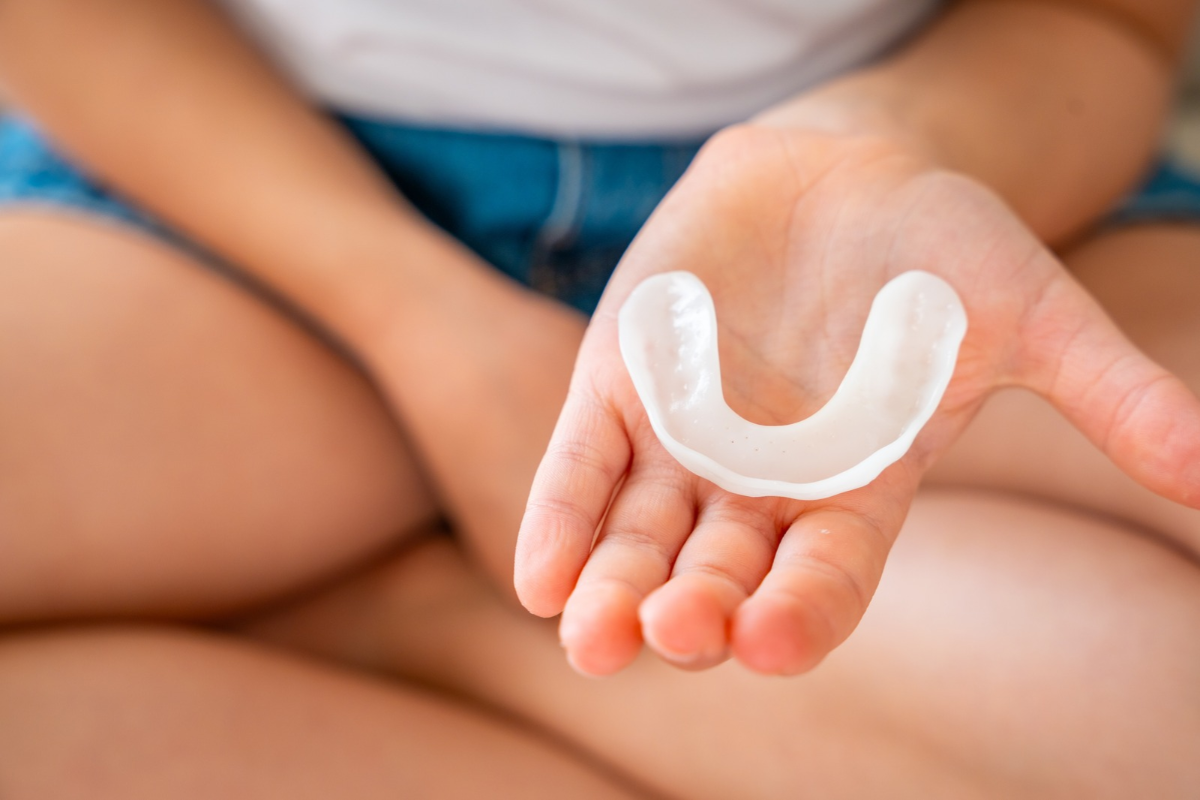
Many Falcon residents wear mouthguards to protect their teeth. They help with grinding, sports, and jaw pain. But a mouthguard is not a treatment — it is a shield. Knowing the 5 teeth warning signs your mouthguard can’t fix alone in Falcon could save your smile from serious damage.
At East Side Modern Dentistry, Dr. Andre Shook sees patients every week who waited too long. What started as a small sensitivity issue became a costly procedure. Catching early warning signs gives you the best chance at simple, affordable care.
Why Mouthguards Alone Are Not Enough for Tooth Problems in Falcon
Mouthguards do an excellent job of absorbing impact and reducing grinding pressure. However, they cannot reverse decay, treat infection, or repair damaged enamel. They protect what is already there — they cannot heal what is already wrong.
Think of a mouthguard like a seatbelt. It reduces injury, but it does not fix a broken engine. If your teeth are already showing warning signs, you need professional care alongside protection.
Here are common reasons patients in Falcon rely too heavily on mouthguards:
- They assume wearing one means their teeth are fully protected
- They delay dental visits because they feel no sharp pain
- They do not notice gradual changes in tooth color or texture
- They mistake sensitivity for normal grinding side effects
Understanding what a mouthguard cannot do is the first step toward better dental health.
Warning Sign 1: Tooth Sensitivity That Keeps Getting Worse
Some sensitivity after grinding is normal. But increasing sensitivity — especially to hot, cold, or sweets — signals something deeper. It often means enamel erosion or early decay has begun. Your mouthguard cannot reverse that process.
Enamel does not grow back on its own. Once it wears thin, bacteria reach the inner layers of your tooth. This is when cavities form, and nerves become exposed. Early treatment stops that progression before a root canal becomes necessary.
Dr. Shook recommends mentioning any new or worsening sensitivity at your next visit. Even mild discomfort is worth discussing. Acting early in Falcon means simpler treatment options.
Warning Sign 2: Bleeding or Swollen Gums You Keep Ignoring
Bleeding gums are one of the most overlooked early warning signs. Many patients assume it is from brushing too hard. In reality, it is often the first sign of gum disease. A mouthguard does nothing to treat gum inflammation or bacterial infection beneath the gumline.
Gum disease progresses in stages. The early stage — gingivitis — is completely reversible with professional care. Left untreated, it becomes periodontitis, which can lead to bone loss and tooth loss. Patients in Falcon should never ignore this warning sign.
Watch for these early gum symptoms:
- Gums that bleed when brushing or flossing
- Red, puffy, or tender gum tissue
- Gums that appear to be pulling away from teeth
- Persistent bad breath that does not resolve with brushing
If you notice any of these, schedule a gum disease evaluation promptly. Early intervention makes a significant difference in outcome.
Warning Sign 3: Dark Spots or Visible Changes on Tooth Surfaces
Dark spots on teeth are not cosmetic problems — they are clinical ones. A brown or black spot on a tooth often indicates active decay. Your mouthguard covers the surface but cannot stop bacteria already working underneath the enamel.
Some patients confuse dark spots with staining from coffee or tea. While surface staining is common, true decay has a different texture and location. A dental exam with X-rays reveals what the naked eye cannot detect.
Catching decay early means a simple filling rather than a crown or extraction. For patients who have experienced tooth loss, Dental Implants offer a durable, natural-looking replacement option. But prevention is always the better path.
Dr. Shook encourages Falcon patients to examine their own teeth monthly in good lighting. Any new spot or color change warrants a professional look. Do not assume it will resolve on its own.
Warning Sign 4: Jaw Pain or Headaches That Will Not Go Away
Chronic jaw pain and morning headaches are classic signs of bruxism — teeth grinding during sleep. A mouthguard reduces grinding pressure. But if pain persists despite consistent wear, something else may be happening.
Persistent jaw tension can signal temporomandibular joint (TMJ) dysfunction. It can also mean your mouthguard no longer fits properly. An outdated or poorly fitted guard creates uneven pressure that worsens symptoms over time.
Pain that radiates into the neck, shoulders, or temples needs professional evaluation. Dr. Shook assesses jaw alignment and bite patterns during comprehensive exams. Adjustments to your guard — or additional treatment — may be necessary to restore comfort.
Warning Sign 5: Cracked, Chipped, or Worn-Down Teeth
Mouthguards slow enamel wear — they do not stop it entirely in severe grinders. If your teeth look shorter, flatter, or have visible cracks, significant damage has already occurred. This level of wear requires restorative dental work.
Cracked teeth are also vulnerable to fracture and infection. A crack can extend to the root if left unaddressed. At that point, extraction may be the only option. Early restorative care prevents that outcome.
For children who grind their teeth, Dental Sealants provide an extra protective layer over vulnerable molar surfaces. Sealants work alongside mouthguards to reduce decay risk in young patients whose enamel is still developing.
Adults with worn enamel may benefit from crowns, bonding, or other restorative options. Dr. Shook evaluates each case individually and recommends the least invasive path forward.
What to Do When You Spot These Warning Signs in Falcon
Recognizing a warning sign is only the first step. Taking action quickly is what protects your long-term oral health. The good news is that early-stage dental problems are almost always easier and less costly to treat.
Here is what East Side Modern Dentistry recommends for Falcon patients:
- Schedule a comprehensive dental exam if you notice any of the five warning signs
- Bring your current mouthguard so Dr. Shook can assess fit and condition
- Discuss any symptoms — even mild ones — during your visit
- Follow through with recommended treatment before symptoms worsen
Dr. Andre Shook and the East Side Modern Dentistry team take a patient-first approach. Education and early intervention are central to how they care for Falcon families. You deserve to understand exactly what is happening in your mouth — and what your options are.
Do not let a mouthguard give you a false sense of security. It is one important tool among many. Pair it with regular professional care for the best results. Book Now to schedule your appointment with our team.
Frequently Asked Questions
Can a mouthguard fix tooth decay or gum disease?
No. A mouthguard protects teeth from grinding pressure and impact. It cannot treat active decay, reverse gum disease, or repair damaged enamel. These conditions require professional dental care from a licensed provider like Dr. Andre Shook.
How often should I replace my mouthguard?
Most mouthguards should be replaced every one to two years for heavy grinders. If your guard shows visible wear, cracks, or no longer fits snugly, replace it sooner. An ill-fitting guard can cause uneven bite pressure and worsen symptoms.
When should I see a dentist about tooth sensitivity?
See a dentist if sensitivity lasts more than a few days, worsens over time, or occurs without an obvious cause. Increasing sensitivity often signals enamel erosion or early decay — both of which require professional treatment to address effectively.
Are dental sealants only for children?
Dental sealants are most commonly applied to children’s molars, but adults with deep grooves and no existing decay can also benefit. Dr. Shook evaluates each patient individually to determine whether sealants are an appropriate preventive option.
What happens if I ignore bleeding gums?
Ignoring bleeding gums allows gum disease to progress from gingivitis to periodontitis. Advanced gum disease causes bone loss, gum recession, and eventually tooth loss. Early treatment is far simpler and more effective than managing advanced stages of the disease.