


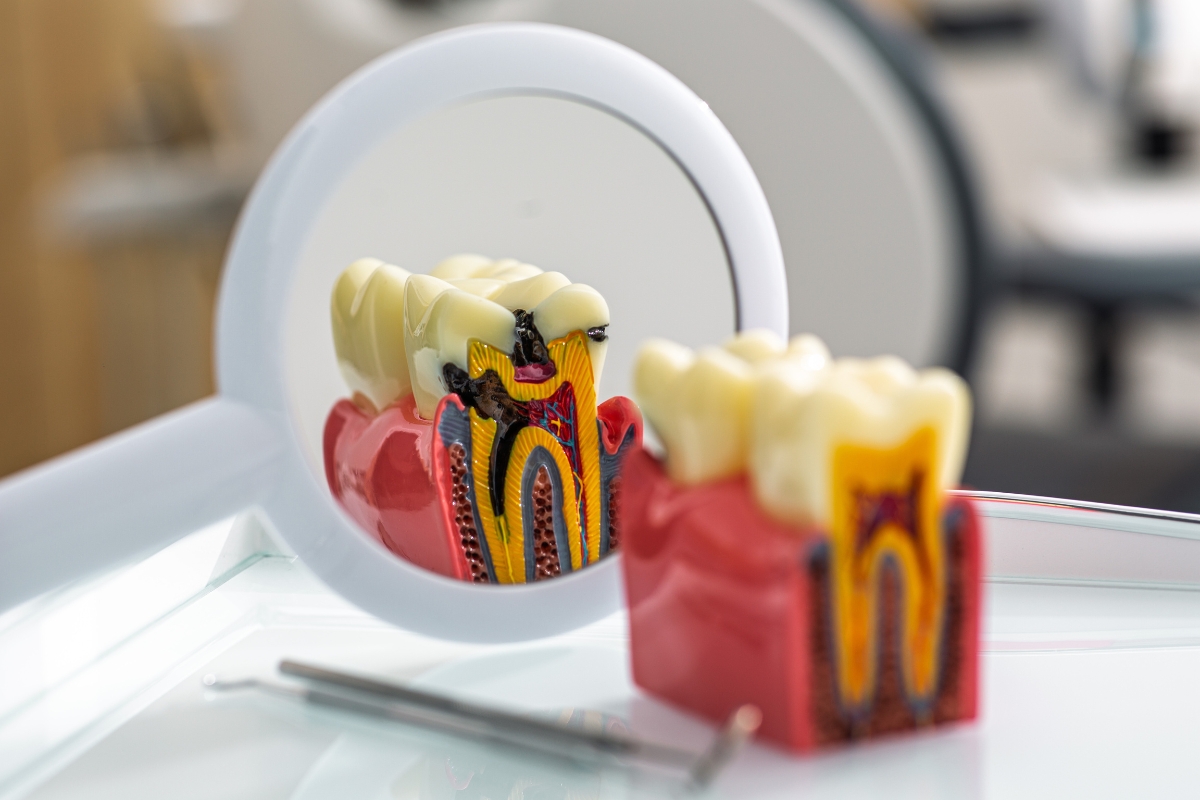
Tooth pain has a way of hijacking your entire day. One minute you’re fine, and the next you’re wincing every time you sip coffee or chew on one side of your mouth. But here’s the question patients ask us almost every week at East Side Modern Dentistry: is this just a cavity, or is it something more serious, like an abscess?
The truth is, you can’t always tell the difference on your own — and that’s exactly why working with an experienced dentist in Falcon matters. A cavity and an abscess can feel similar in the early stages, but they require very different levels of care. Waiting too long to find out which one you’re dealing with can turn a simple filling into an emergency root canal or worse. In this guide, we’ll break down how to tell them apart, when it’s time to seek emergency dental treatments in Falcon, and how our team helps patients get out of pain fast.
What Is a Cavity, Exactly?
A cavity, or dental caries, forms when plaque and bacteria slowly eat away at your tooth enamel. It starts small — often without any pain at all — and progresses through the layers of the tooth if it isn’t treated. Common signs of a cavity include:
- Mild to moderate sensitivity to hot, cold, or sweet foods
- A visible dark spot, pit, or hole in the tooth
- Occasional, dull discomfort when chewing
- No swelling in the face or gums
Cavities are typically treated with routine dental care like fillings, dental sealants, or in more advanced cases, crowns. Left alone, though, a cavity doesn’t stay small. It works its way toward the nerve of the tooth, and that’s when things get painful — and when an abscess can develop.
What Is a Dental Abscess?
An abscess is a pocket of infection that forms when bacteria reach the soft inner pulp of the tooth or the surrounding gum tissue. Unlike a cavity, an abscess is a true dental infection, and it won’t resolve on its own. Watch for these warning signs:
- Throbbing, persistent pain that may radiate to your jaw, ear, or neck
- Swelling in the face, cheek, or gums
- A bad taste in your mouth or foul-smelling breath
- A small bump on the gum that looks like a pimple
- Fever, fatigue, or swollen lymph nodes
- Sensitivity to pressure or temperature that lingers long after exposure
If you’re noticing swelling, fever, or pain that keeps you up at night, this isn’t something to “wait out.” An abscess is a medical concern, not just a dental inconvenience, and it calls for emergency dental treatments right away.
How a Falcon Dentist Tells the Difference
When you come into East Side Modern Dentistry with tooth pain, here’s generally how Dr. Andre Shook and our team get to the bottom of it:
1. A thorough oral exam. We look for visible decay, swelling, redness, or drainage around the tooth and gums.
2. Digital X-rays. X-rays let us see below the surface — bone loss, abscess pockets, and decay that’s invisible to the naked eye are all easy to spot this way.
3. Percussion and temperature testing. Tapping on the tooth or testing its response to cold can tell us whether the nerve is still healthy or whether infection has set in.
4. Checking for swelling and lymph node involvement. This helps us understand whether the infection is localized or starting to spread, which changes how urgently we need to act.
Once we know exactly what we’re dealing with, we can recommend the right dental treatments in Falcon — whether that’s a simple filling or urgent infection control.
Emergency Dental Treatments for Tooth Infections
If an abscess is confirmed, time matters. Bacteria from a dental infection can spread to the jaw, neck, and even the bloodstream if it’s ignored, so our priority is always stopping the infection and getting you comfortable. Depending on the severity, treatment may include:
Drainage of the Abscess
For a localized abscess, we may need to drain the infection directly to relieve pressure and remove the source of bacteria.
Root Canal Therapy
If the infection has reached the inner pulp of the tooth, a root canal removes the infected tissue, cleans out the canal, and seals the tooth — saving it from extraction in most cases.
Antibiotics
When infection has started to spread beyond the tooth, antibiotics may be prescribed alongside dental treatment to bring it under control.
Tooth Extraction
If the tooth is too damaged to save, extraction may be the safest path forward, especially if the infection is severe or recurring. Our team also offers oral surgery for more complex extractions.
Pain Management
We know dental pain can be unbearable. Our team prioritizes getting you comfortable quickly, whether that means local anesthesia, sedation options, or a same-week appointment to stop the pain at its source.
The good news? We offer emergency dental care in Falcon, so you’re not stuck waiting days while an infection gets worse.
Why You Shouldn’t Wait on Tooth Pain
We get it — life is busy, and a little tooth sensitivity doesn’t always feel urgent. But here’s why it’s worth calling sooner rather than later:
- Infections spread. What starts in one tooth can spread to your jawbone, sinuses, or even your bloodstream in rare but serious cases.
- Costs go up. A cavity caught early might only need a filling. Left untreated, it can mean a root canal, crown, or extraction — all of which cost more time and money.
- Pain rarely improves on its own. Dental pain is your body telling you something is wrong. Over-the-counter pain relievers can mask symptoms, but they don’t treat the underlying infection.
- Your overall health is connected to your oral health. Chronic dental infections have been linked to broader health issues, including heart and respiratory concerns.
How to Prevent Cavities and Abscesses
Prevention is always easier (and cheaper) than emergency treatment. Our Falcon dentist team recommends:
- Brushing twice daily and flossing once a day to remove plaque before it hardens into tartar
- Scheduling routine dental care visits twice a year for cleanings and exams
- Asking about dental sealants, especially for kids and teens, to protect back teeth from decay
- Treating sensitivity or minor pain promptly instead of waiting for it to worsen
- Eating a balanced diet and limiting sugary snacks and drinks
- Staying current on gum disease treatment if you notice bleeding or receding gums, since gum disease can also lead to infection
Trusted Emergency Dentistry in Falcon
Whether it turns out to be a cavity or a full-blown abscess, the most important step is getting it checked out by a professional rather than guessing. At our dental office in Falcon Dr. Andre Shook and our team provide compassionate, judgment-free care for patients dealing with tooth pain, swelling, or dental emergencies. We use advanced diagnostic technology to quickly identify the issue and walk you through every option — from a straightforward filling to same-week emergency treatment.
Don’t wait until the pain becomes unbearable. If you’re searching for a reliable dentist in Falcon who treats both routine cavities and urgent infections, our doors — and our schedule — are open.
East Side Modern Dentistry 11950 Tourmaline Dr, Ste 100, Falcon 80831 Call us today at (719) 484-8787 or request an appointment online to get the relief you deserve.
Frequently Asked Questions
How do I know if I have a cavity or an abscess?
A cavity usually causes mild, occasional sensitivity, while an abscess causes throbbing pain, swelling, and sometimes fever. If you notice swelling in your face or gums, it’s best to see a dentist right away rather than guess.
Can a cavity turn into an abscess if left untreated?
Yes. If decay isn’t treated, bacteria can reach the inner pulp of the tooth and cause an infection, which leads to an abscess. This is one of the main reasons routine dental visits matter so much.
What happens if a dental abscess is left untreated?
An untreated abscess can spread to the jaw, neck, sinuses, or bloodstream, leading to serious health complications. It will not heal on its own and requires professional dental treatment.
Is a dental abscess a dental emergency?
Yes. Swelling, fever, or severe throbbing pain are signs you need emergency dental treatment as soon as possible. Don’t wait for regular business hours if symptoms are severe — call our office right away.
Will I need a root canal for an abscessed tooth?
Often, yes. A root canal removes the infected tissue and saves the natural tooth. In cases where the tooth is too damaged, extraction may be recommended instead.
How can I find emergency dental care near me in Falcon?
East Side Modern Dentistry offers emergency dental care for patients in Falcon, CO and the surrounding area. Call (719) 484-8787 to be seen as soon as possible for tooth pain, swelling, or infection.
Can antibiotics alone cure a tooth infection?
Antibiotics can help control the spread of infection, but they don’t address the underlying cause. The infected tooth still needs to be treated through drainage, a root canal, or extraction.



Unable to locate Global Block : 4932